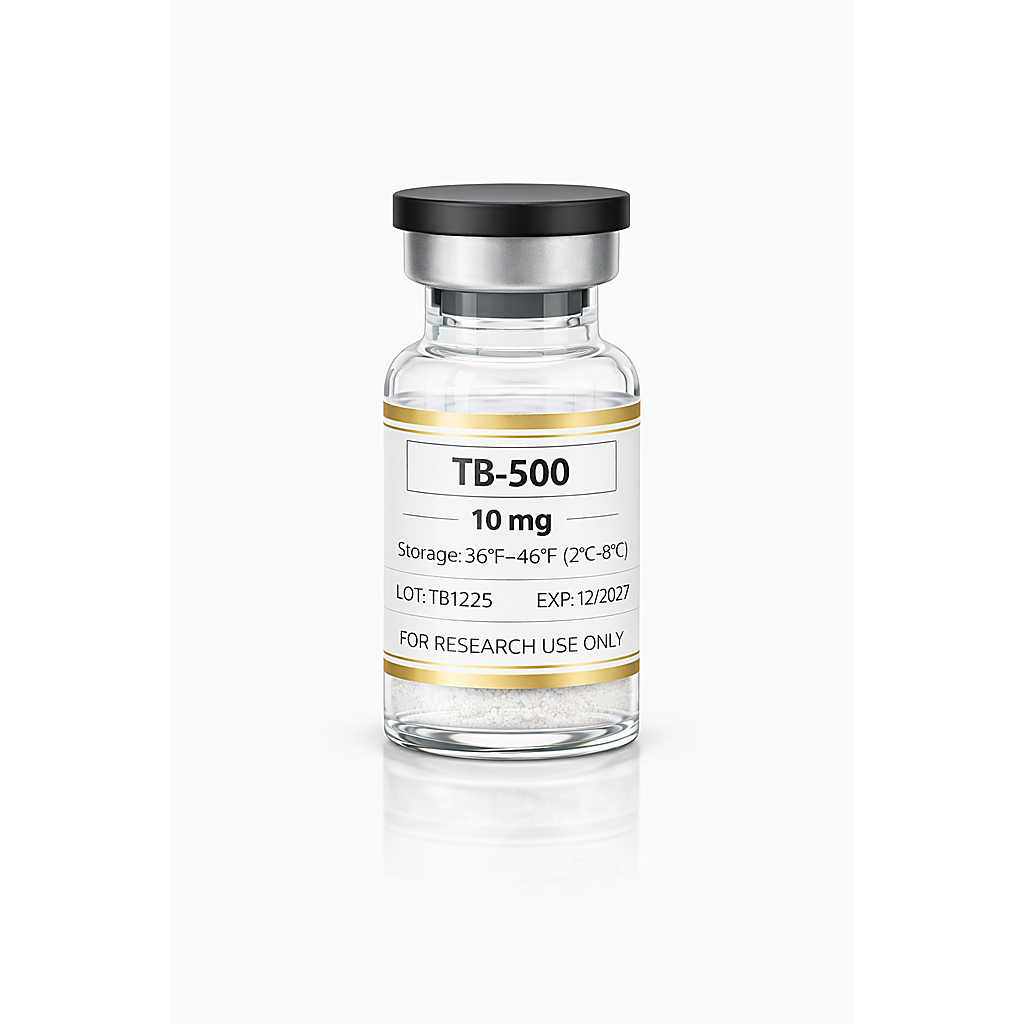
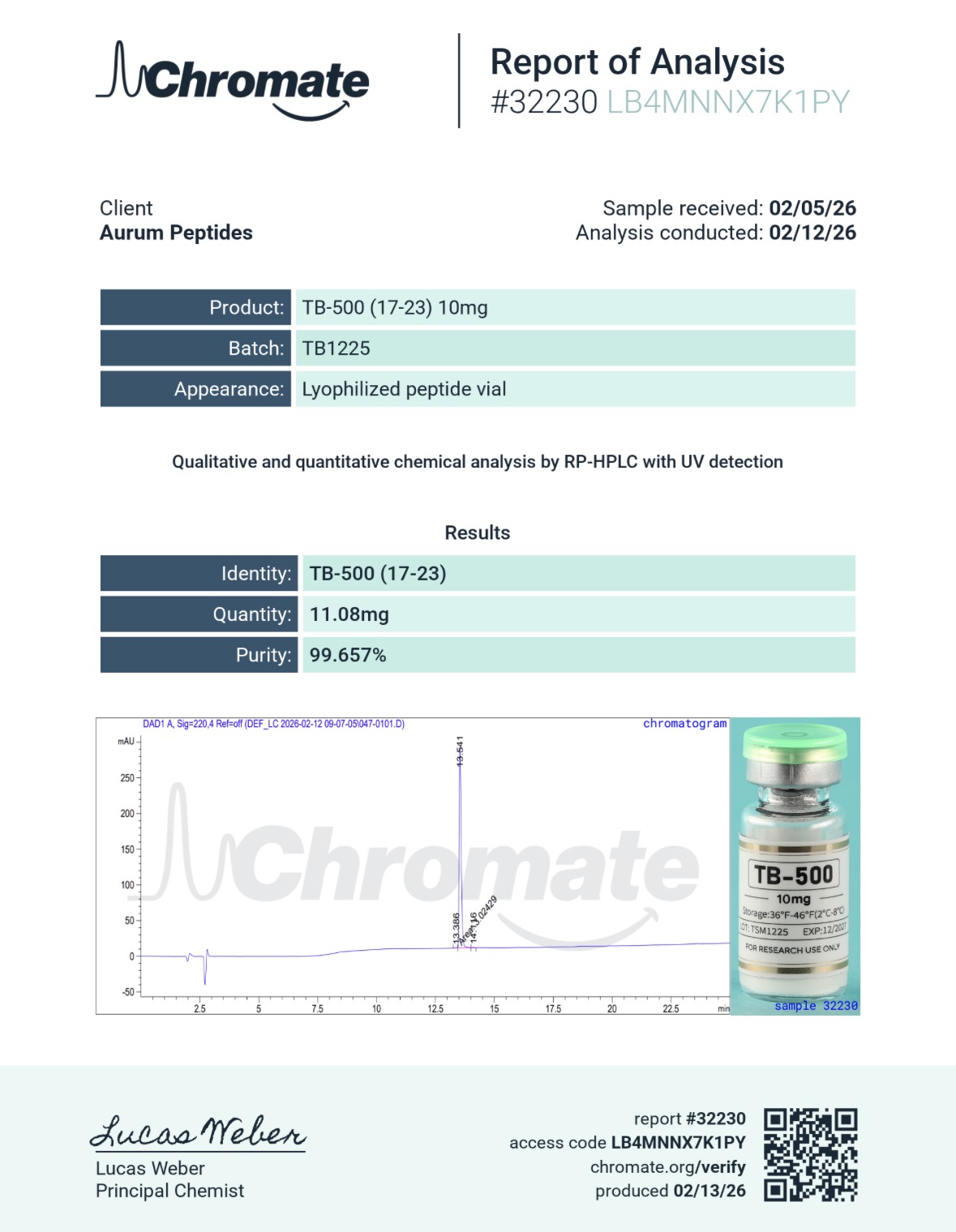
TB-500 10MG

Categories:

TB-500 (Thymosin Beta-4) is a research-use-only peptide under laboratory investigation. Structurally derived from amphibian venoms and mammalian sources, it has been explored for potential applications in tissue regeneration and cellular repair. This formulation presents 10 mg of TB-500 peptide, intended exclusively for academic and experimental use in controlled research environments.

$73.16

12 in stock

12 in stock

⚠️ RESEARCH USE ONLY

This product is for R&D purposes only and is not approved for human or veterinary use.

Satisfaction Guaranteed

Secure
Payment

Third-party
Tested

Research Use Disclaimer

Every serious peptide company prominently displays this. Example Research Use Only All products offered by Ascend Biologics are intended strictly for laboratory research purposes. Products are not for human consumption and are not intended for diagnostic, therapeutic, or medical use. By purchasing from our website, customers confirm they are qualified researchers or laboratories and understand the intended research-use designation.


TB-500 10MG

TB-500, a synthetic peptide derived from bovine collagen, has been the subject of extensive research in the academic and scientific communities. This peptide is widely studied for its potential biological effects in animal models and is classified strictly as research-use-only material. Below is a detailed overview of its scientific context, key research areas, and compliance information.

Research Context

TB-500 was first identified and synthesized in the late 1980s by researchers at the University of Connecticut and later patented for its potential therapeutic properties in animal studies. Originally developed as a peptide sequence, TB-500 has since become a notable compound in the study of tissue regeneration, cellular repair mechanisms, and wound healing. It is a decapeptide (comprising ten amino acids) that has demonstrated promise in various biological processes under controlled experimental conditions.

Research Overview

TB-500 has been extensively investigated for its role in promoting cellular proliferation, differentiation, and extracellular matrix formation. Research findings suggest that it may enhance tissue repair by modulating signaling pathways involved in wound healing, such as those linked to transforming growth factor-beta (TGF-β) signaling. Animal studies have shown potential benefits in models of muscle regeneration, tendon repair, and skin regeneration, among other applications.

Key Research Focus Areas

  • Tissue Regeneration: TB-500 has been evaluated for its effects on muscle, tendon, and cartilage repair in preclinical models, showing promise in accelerating tissue regeneration.
  • Wound Healing: Studies have explored its role in enhancing wound closure and reducing fibrosis in experimental settings.
  • Cellular Signaling: Research focuses on its interaction with growth factor pathways, particularly TGF-β, which influences cellular behavior during repair processes.
  • Biocompatibility: Safety and biocompatibility assessments have been conducted to determine its potential in biological environments without significant toxicity or adverse reactions.
  • Synthetic Modifications: Various analogues and derivatives of TB-500 have been studied to optimize its stability, bioavailability, and efficacy in experimental models.

Safety and Compliance

TB-500 is intended solely for use in academic, research, and industrial applications. All materials containing TB-500 must adhere strictly to laboratory protocols, including proper handling, storage, and disposal procedures to ensure safety and compliance with relevant regulations. It is critical that users are well-versed in the experimental protocols and potential risks associated with peptide research.

For research use only. Not for human or animal consumption.
Date Added :
04/06/2026

Reviews

There are no reviews yet.

Be the first to review “TB-500 10MG”

Your email address will not be published. Required fields are marked *


TB-500 10MG

TB-500, a synthetic peptide derived from bovine collagen, has been the subject of extensive research in the academic and scientific communities. This peptide is widely studied for its potential biological effects in animal models and is classified strictly as research-use-only material. Below is a detailed overview of its scientific context, key research areas, and compliance information.

Research Context

TB-500 was first identified and synthesized in the late 1980s by researchers at the University of Connecticut and later patented for its potential therapeutic properties in animal studies. Originally developed as a peptide sequence, TB-500 has since become a notable compound in the study of tissue regeneration, cellular repair mechanisms, and wound healing. It is a decapeptide (comprising ten amino acids) that has demonstrated promise in various biological processes under controlled experimental conditions.

Research Overview

TB-500 has been extensively investigated for its role in promoting cellular proliferation, differentiation, and extracellular matrix formation. Research findings suggest that it may enhance tissue repair by modulating signaling pathways involved in wound healing, such as those linked to transforming growth factor-beta (TGF-β) signaling. Animal studies have shown potential benefits in models of muscle regeneration, tendon repair, and skin regeneration, among other applications.

Key Research Focus Areas

  • Tissue Regeneration: TB-500 has been evaluated for its effects on muscle, tendon, and cartilage repair in preclinical models, showing promise in accelerating tissue regeneration.
  • Wound Healing: Studies have explored its role in enhancing wound closure and reducing fibrosis in experimental settings.
  • Cellular Signaling: Research focuses on its interaction with growth factor pathways, particularly TGF-β, which influences cellular behavior during repair processes.
  • Biocompatibility: Safety and biocompatibility assessments have been conducted to determine its potential in biological environments without significant toxicity or adverse reactions.
  • Synthetic Modifications: Various analogues and derivatives of TB-500 have been studied to optimize its stability, bioavailability, and efficacy in experimental models.

Safety and Compliance

TB-500 is intended solely for use in academic, research, and industrial applications. All materials containing TB-500 must adhere strictly to laboratory protocols, including proper handling, storage, and disposal procedures to ensure safety and compliance with relevant regulations. It is critical that users are well-versed in the experimental protocols and potential risks associated with peptide research.

For research use only. Not for human or animal consumption.
Related Peptides

Age Verification!

*By continuing, you confirm eligibility and legal compliance.